 Skip to content





Are Winter Months Harder on Your Pet’s Joints?

Share
Pets are a source of great happiness and companionship in our everyday lives. Often treated as members of the family, these loving and loyal beings require health care and attention just like humans. As most part of India is currently experiencing winter season, pets, just like humans, can also face joint disorders that may significantly impact their well-being.
In this blog, we explore the early signs of joint issues in pets, especially during winters and how can they be prevented especially with the choice of best dog joint supplements.
Common Winter Joint Problems in Pets
Here are some of the common joint problems that persist especially in the winter seasons.
- Arthritis: This is the most common joint problem in pets, especially in senior pets. It entails swelling of the joints; leading to pain and stiffness.
- Osteoarthritis (Degenerative Joint Disease): A progressive condition where joint cartilage wears down over time, leading to chronic pain, reduced mobility, and stiffness. The condition often worsens in cold weather.
- Hip Dysplasia: More common in large breed dogs, hip dysplasia is a hereditary condition that occurs when the hip joint does not form properly.
- Elbow Dysplasia: This is a developmental disorder of the elbow joint causing pain, lameness and reduced mobility.
- Luxating Patella: Commonly observed in small-breed dogs, this condition involves the kneecap slipping out of its normal position.
- Ligament Injuries: Injuries such as ruptured ligaments, including cruciate ligament tears in dogs, can result in joint pain and instability.

Symptoms of Joint Pain in Animals
The first signs of joint issues should be identified promptly so that the condition can be controlled before it progresses. Here are some common signs to watch for:
- Limping or Favoring a Limb: If the pet walks with a limp or avoids putting weight on a particular leg, it may indicate that the pet is in pain.
- Stiffness: Joint pain is often noticeable after periods of inactivity, such as waking up in the morning or after sitting for a long time.
- Difficulty Rising or Lying Down: Dogs and cats with joint issues may have difficulty rising to stand up from a lying position or avoid certain positions altogether.
- Reduced Activity: A noticeable decrease in activity, playfulness or willingness to exercise can be a sign of joint discomfort.
- Swelling or Warmth: Pain and stiffness around the joint or redness or warmth of the skin over the joint suggests inflammation.
- Behavioral Changes: Like any other animals, pets in pain may be hard to deal with as they may be irritable, anxious, or even change their usual behavior.
Preventing Joint Problems
Some joint disorders may be hereditary or due to the natural aging process; however, here are some things you can do to minimize your pets’ likelihood of developing joint issues.
- Maintain a Healthy Weight: Obesity exerts extra pressure on joints and therefore leads to the deterioration of joints. The pet should be fed the right amount of food and this should be combined with a good exercise program.
- Keep Pets Warm: Joint stiffness can worsen in cold temperatures. Thus, ensure providing warm bedding and avoid exposure to cold floors or drafts.
- Provide Proper Nutrition: Provide your pet with a well-balanced diet that contains nutrients that are beneficial to the joints. Some of the foods that are beneficial to the joints include those that are rich in glucosamine and chondroitin, omega-3 fatty acids, and antioxidants.
- Regular Exercise: Moderate exercise should be done regularly because it assists in maintaining flexibility of the joints and building up muscles around those joints. Do not engage in activities that have the individual jumping a lot or putting much stress on the joints.
- Joint Supplements: You can also plan to incorporate the joint supplements for dogs in the diet of your pet if it is of the predisposed breeds. Talk to your vet to determine which supplements you should be giving your dog.
- Regular Vet Check-ups: One should take their pet for a vet check-up often so that joint problems may be diagnosed in the early stages. The vet needs to be consulted for advice on prevention and other remedies to avoid or treat joint problems in your pet. A dog joint pain spray is also recommended if need be.
- Controlled Activity: If your pet belongs to a breed predisposed to joint problems, avoid exercises that are likely to cause an injury in the first place. For instance, use a ramp instead of stairs and avoid rough or high-impact activities.

Why Choose Vetonnix for Your Pet’s Joint Health
As discussed above, choosing the dog joint supplements can often feel overwhelming for pet parents. Understanding what truly benefits your pet’s health is essential, and that’s where Vetonnix steps in to simplify the process.
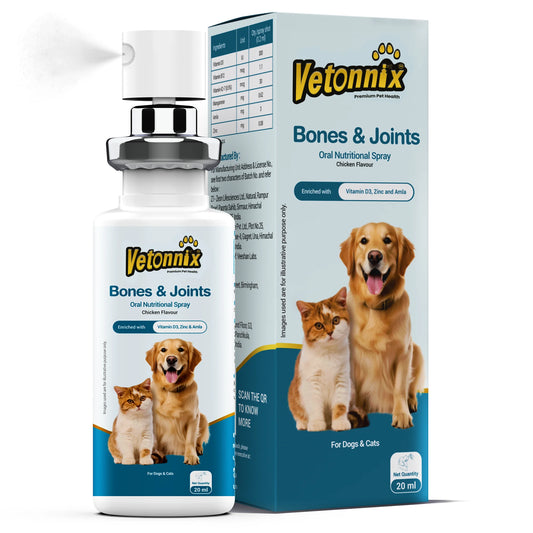
Feeding pets tablets or gummies is often a struggle, leading to missed doses and inconsistent care. Vetonnix Bones & Joints Oral Spray Supplement offers a convenient and stress-free alternative.
Formulated with advanced oral spray technology, it delivers essential nutrients such as Vitamin D3, Vitamin B12, and Zinc for faster absorption. This efficient formula supports healthy bones, improved joint flexibility, and smoother mobility; helping your fur baby stay active, comfortable, and happy every day.
Conclusion
It is for this reason that proper care of the joints of your pet is very important for their health and happiness. Knowing what indicates joint issues and how to avoid them will allow your pet to live a long, happy, and pain-free life.
Other factors such as having the pet take its vet check-ups, feeding on a balanced diet, exercising properly, and providing a pet-friendly environment are some of the ways through which your pet’s joints can be maintained.
Be aware of any changes in your pet’s behavior or movement. In this way, by paying attention and taking care of your pet, you can ensure that your pet is happy, active, and healthy.